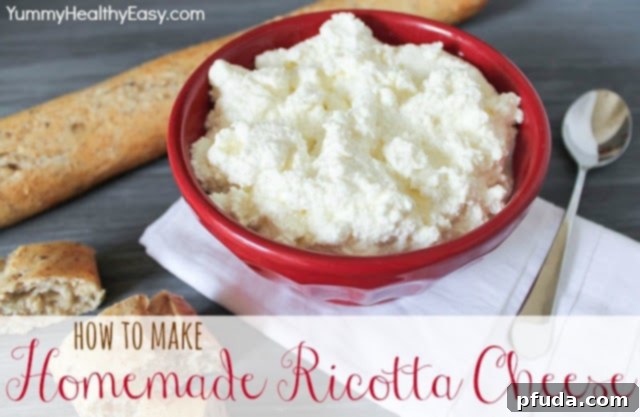
Discover the Joy of Homemade Ricotta Cheese: An Incredibly Easy & Delicious Recipe Guide
For a long time, my world revolved around cheese. It was an essential part of my culinary life, from gourmet charcuterie boards to simple comfort dishes. I’d spend countless minutes in the dairy aisle of my local grocery store, mesmerized by the vast array of delicious varieties. I’ve sampled almost every type imaginable, appreciating both the classics and the more adventurous options. My passion for cheese even led me to work in a vibrant tapas restaurant, where I had the pleasure of serving exquisite plates of meats and cheeses. During my time there, I learned extensively about different cheese types, their origins, and their intricate production processes. Yet, despite my deep appreciation and knowledge, it honestly never occurred to me that I could actually make my own fresh cheese at home.
That all changed recently when a friend from the gym casually mentioned she had made ricotta over the weekend. I distinctly remember doing a double-take. “Made… homemade ricotta?” I asked, completely floored by the revelation. It was an absolute game-changer! And guess what, everyone? You can absolutely MAKE your own fresh ricotta cheese! Not only is it surprisingly simple, but it’s also incredibly rewarding and produces a product far superior to anything you’ll find pre-packaged.
Why Homemade Ricotta is a Game Changer: Taste, Value, and Freshness
The experience of tasting freshly made ricotta is truly incomparable. Store-bought ricotta often contains stabilizers and preservatives, and its flavor can be somewhat muted or overly tart. When you make it yourself, you control every ingredient, resulting in a naturally sweet, incredibly creamy, and light texture that melts in your mouth. This fresh, delicate flavor profile elevates any dish it touches, whether savory or sweet.
Beyond the superior taste, there’s a significant financial benefit. The amount of luscious ricotta you can make at home for just a fraction of the cost of a similar quantity from the grocery store is astonishing. Imagine getting premium quality cheese without the premium price tag! Plus, the entire process takes very little time, making it an ideal project for a lazy weekend morning or even a quick evening endeavor. If you’ve never incorporated ricotta into your cooking before, don’t worry! I’ll be sharing a couple of amazing, versatile recipes—both savory and sweet—that showcase your hand-made ricotta beautifully. Or, you can simply enjoy it spread generously on a warm, crusty baguette slice, perhaps with a drizzle of olive oil and a sprinkle of black pepper. Absolute yum!
On a lighter note, I can’t even read the word “ricotta” without trying to pronounce it the authentic Italian way: ree-coat-ah. Yeah, I’m cheesy like that. Ha!
Understanding Ricotta: A Brief Overview
Ricotta, which literally means “re-cooked” in Italian, traditionally refers to a cheese made from the whey leftover from making other cheeses like mozzarella or provolone. However, the homemade version we’re making is a “whole milk ricotta,” which uses fresh milk and cream to create a rich, creamy, and undeniably fresh cheese. This method is simpler for home cooks and yields a product with fantastic texture and flavor. It’s a soft, unaged fresh cheese known for its versatility and delicate sweetness.
The Simple Ingredients for Homemade Ricotta
Making your own ricotta requires surprisingly few ingredients, most of which you likely already have in your kitchen or can easily find at any grocery store. The key is quality, especially for your dairy products. Here’s what you’ll need:
- Whole Milk: The foundation of our ricotta. Using whole milk is crucial as its higher fat content contributes to the creamy texture and rich flavor. Avoid skim or low-fat milk, as they won’t produce the same luscious results.
- Heavy Cream: This addition is what gives homemade ricotta its signature silky smoothness and adds an extra layer of decadence. Don’t skip it if you want that truly indulgent texture.
- White Vinegar (or Lemon Juice): This is your acid, the magical ingredient that causes the milk to curdle, separating the solids (curds) from the liquids (whey). White vinegar is typically used for a neutral flavor, but fresh lemon juice can also work beautifully for a subtle citrus note.
- Salt: A touch of salt enhances the flavor of the ricotta, balancing its natural sweetness.
Essential Equipment You’ll Need
You don’t need any fancy cheese-making gadgets to whip up a batch of homemade ricotta. Most of the tools are standard kitchen items:
- A medium or large heavy-bottomed saucepan to prevent scorching the milk.
- A whisk or spoon for stirring.
- A fine-mesh strainer or colander to separate the curds from the whey.
- Cheesecloth, ideally two layers, to line the strainer and collect the curds.
- A large bowl to place under the strainer to catch the whey.
- Measuring cups and spoons.
Step-by-Step Guide to Making Ricotta (Detailed Process)
The process of making fresh ricotta is less about complex techniques and more about precise timing and gentle handling. Follow these steps to achieve perfect, creamy ricotta every time:
Step 1: Combine and Heat the Dairy
Begin by pouring the whole milk, heavy cream, white vinegar (or lemon juice), and salt into your medium saucepan. Give it a good stir to ensure everything is well combined and the salt dissolves. Place the saucepan over medium heat. The goal here is to bring the milk mixture to a gentle simmer. You’re not looking for a rolling boil, but rather small bubbles forming around the edges of the pan and steam rising from the surface. Continuously stir the mixture gently to prevent it from sticking to the bottom of the pan and to ensure even heating. This step is crucial for activating the curdling process.
Step 2: Watch for the Curds to Form
Once the mixture reaches a simmer, reduce the heat slightly to maintain that gentle state. Continue to simmer for about 2-5 minutes, stirring occasionally. During this time, you should start to see the magic happen: the milk mixture will begin to separate. Small, white, fluffy curds will form and visibly clump together, floating in a yellowish-green liquid, which is the whey. If you don’t see distinct separation after 5 minutes, you can add another teaspoon of vinegar or lemon juice, stir gently, and continue simmering for another minute or two. The goal is clear separation, indicating the curds have fully formed.
Step 3: The Gentle Strain
Prepare your straining setup while the curds are forming. Line a fine-mesh strainer or colander with two layers of damp cheesecloth. This double layer ensures that even the smallest curds are caught while allowing the whey to drain efficiently. Place this lined strainer over a large bowl to collect the draining whey (which can be reserved for other uses, like baking, if desired). Once your curds have fully separated, carefully and gently pour the entire contents of the saucepan – curds and whey – into the cheesecloth-lined strainer. Avoid stirring or pressing the curds at this stage, as this can force them through the cheesecloth and result in a less smooth ricotta.
Step 4: The Final Squeeze and Serving
Allow the curds to drain naturally for approximately 15 minutes. This initial draining period allows most of the excess whey to drip away, leaving you with a soft, moist ricotta. The longer you let it drain, the firmer your ricotta will be. For a creamy, spreadable ricotta, 15-20 minutes is often perfect. After 15 minutes, gather the corners of the cheesecloth together to form a pouch around the ricotta. Gently squeeze the pouch to remove any remaining excess liquid. Be careful not to squeeze too hard, or you’ll end up with dry, crumbly ricotta. The goal is to achieve a wonderfully moist and fluffy texture. Transfer your freshly made ricotta to a bowl. It’s now ready to be used in your favorite recipes or served simply with bread and a drizzle of olive oil. Enjoy the unparalleled taste of truly fresh, homemade ricotta!
How To Make Homemade Ricotta Cheese
Print
Pin
Rate
Ingredients
- 6 cups whole milk
- 2 cups heavy cream
- 3 Tbsp. white vinegar
- 1 tsp. salt
Instructions
-
Pour milk, heavy cream, vinegar and salt into a medium saucepan. Place over medium heat and bring milk mixture to a simmer.
-
Simmer for 2-5 minutes, stirring every so often. You should see curds begin to form.
-
Line a strainer with two layers of damp cheesecloth. Gently pour the curds and whey into the strainer and let drain for 15 minutes.
-
After 15 minutes, gather the cheesecloth together and gently squeeze the excess water from the cheese. Transfer ricotta to a bowl. It’s ready to use in recipes or served on bread with a drizzle of olive oil. Enjoy! (Keeps for several days in a sealed container in the refrigerator.)
Creative Ways to Use Your Fresh Homemade Ricotta
Now that you have a batch of exquisite homemade ricotta, the culinary possibilities are endless! Its creamy texture and mild, slightly sweet flavor make it incredibly versatile for both savory and sweet applications. Here are some ideas to get you started:
Savory Delights
- Pasta Dishes: Ricotta is a star in many Italian pasta recipes. Use it to fill ravioli or tortellini, layer it in a rich lasagna, or simply stir a dollop into warm pasta with fresh herbs and a touch of olive oil for a light, satisfying meal.
- Spreads and Dips: Enjoy it spread on toasted baguette slices, crackers, or crusty bread. Drizzle with olive oil, a sprinkle of sea salt, black pepper, and perhaps some red pepper flakes or fresh basil for an instant appetizer.
- Pizzas and Flatbreads: Dollop ricotta onto homemade pizzas or flatbreads before or after baking. It adds a creamy, rich element that contrasts beautifully with savory toppings like roasted vegetables, cured meats, or fresh greens.
- Savory Tarts and Quiches: Incorporate ricotta into the filling for quiches or savory tarts. It adds moisture and a delicate texture, preventing the filling from being too dense.
- Stuffed Vegetables: Mix ricotta with herbs, breadcrumbs, and other cheeses to stuff bell peppers, zucchini, or large mushrooms, then bake until golden.
Sweet Indulgences
- Dessert Parfaits: Layer fresh ricotta with berries, granola, honey, or maple syrup for a healthy and delicious breakfast or dessert parfait.
- Cannoli Filling: While traditional cannoli use sheep’s milk ricotta, your homemade cow’s milk version makes for an excellent, lighter filling. Sweeten it with powdered sugar, vanilla, and maybe some orange zest.
- Pancakes and Waffles: Add a few spoonfuls of ricotta to your pancake or waffle batter for incredibly moist, fluffy results. Serve with fresh fruit and syrup.
- Ricotta Cake or Tarts: Bake it into a light and airy ricotta cake, or use it as a creamy filling for fruit tarts, often combined with a little sugar, eggs, and lemon zest.
- Toast Topping: Spread on toast and top with honey, fruit preserves, sliced fresh fruit, or a sprinkle of cinnamon and sugar for a simple yet elegant treat.
Tips for the Best Homemade Ricotta
While the process is straightforward, a few tips can help ensure your homemade ricotta is nothing short of perfect:
- Use High-Quality Dairy: The flavor of your ricotta will directly reflect the quality of your milk and cream. Opt for fresh, whole, un-homogenized milk if possible for the best results, though regular whole milk works wonderfully too.
- Don’t Over-Squeeze: Resist the urge to press out every last drop of whey. A little moisture is key to that creamy, luxurious texture. Over-squeezing will result in dry, crumbly ricotta.
- Experiment with Acid: While white vinegar is common, try fresh lemon juice for a subtly brighter flavor, especially if you plan to use the ricotta in sweet dishes.
- Adjust Salt to Taste: The recipe calls for 1 tsp of salt, but feel free to adjust this based on your preference. You can always add a pinch more after it’s drained.
- Don’t Rush the Simmer: Allow the milk mixture to simmer gently for the full recommended time. This ensures proper curd formation. If the curds aren’t separating well, increase the heat slightly or add a tiny bit more acid.
Storing Your Homemade Ricotta
Once made, fresh homemade ricotta is best enjoyed within a few days. Store it in an airtight container in the refrigerator to maintain its freshness and prevent it from absorbing other odors. If you notice any signs of spoilage, like an off smell or mold, it’s best to discard it.
Embrace Your Inner Cheesemaker!
Making your own ricotta cheese is an incredibly satisfying culinary adventure. It’s simple, economical, and yields a product that tastes infinitely better than its store-bought counterparts. The delicate flavor and creamy texture of fresh ricotta will elevate your favorite dishes and inspire you to explore new culinary creations. So, gather your ingredients, follow these easy steps, and prepare to be amazed by the deliciousness you can create right in your own kitchen!