
The Ultimate Guide to Making the Perfect Fluffy Oven-Baked Potato with Crispy Skin
There’s something incredibly satisfying about a perfectly baked potato. With its irresistibly crispy skin and a light, fluffy interior, it’s a versatile side dish that complements almost any meal, from a casual weeknight dinner to a festive holiday barbecue. While seemingly simple, achieving that ideal texture and flavor requires a few key techniques. Forget bland, dry potatoes or soggy skins – this comprehensive guide will walk you through every step to ensure your oven-baked potatoes are consistently delicious, making them a family favorite for years to come.
Whether you’re serving them alongside a juicy steak, a hearty barbecue, or as a base for a loaded meal, a well-prepared baked potato is a culinary triumph. Many methods exist for cooking potatoes, but baking them in the oven reigns supreme for its ability to deliver superior flavor and texture. This method encourages the skin to crisp up beautifully while the high, dry heat transforms the inside into a cloud-like fluffiness. Let’s delve into the secrets of crafting the perfect baked potato right in your own kitchen.
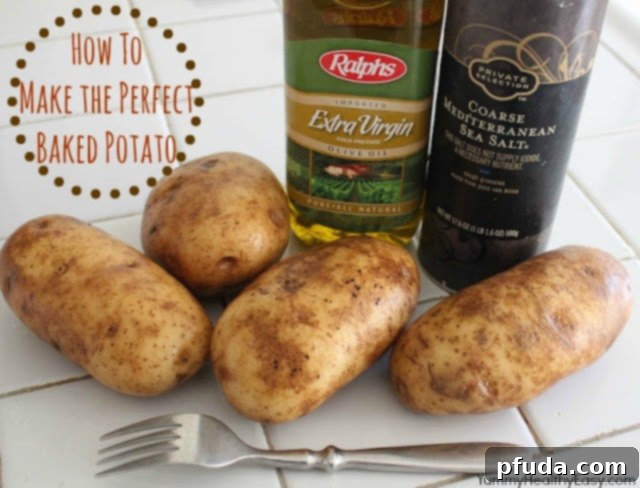
Selecting the Best Potatoes for Baking
The journey to a perfect baked potato begins with choosing the right variety. For oven baking, starchy potatoes are your best friend. They have a dry, mealy texture that becomes wonderfully fluffy when cooked, as opposed to waxy potatoes which tend to stay firm and dense.
- Russet Potatoes: Also known as Idaho potatoes, these are the gold standard for baking. Their high starch content and thick skin are perfect for absorbing flavor and crisping up beautifully. When baked, they yield an incredibly light and airy interior. Look for Russets that are firm to the touch, free of sprouts, green spots, or soft blemishes.
- Size Matters: Aim for potatoes that are similar in size. This ensures they cook evenly, preventing some from being undercooked while others are overdone. Medium to large-sized potatoes (about 8-12 ounces each) are ideal for individual servings.
- Inspection: Before buying, give your potatoes a good once-over. Avoid any with green patches, which indicate solanine – a natural toxin. Also, steer clear of excessively sprouting or bruised potatoes, as these can affect flavor and texture.
Essential Ingredients and Tools for Success
Crafting the perfect baked potato requires only a handful of simple ingredients and basic kitchen tools. Quality matters, even with just a few items!
Ingredients:
- 4 Russet Baking Potatoes: Choose medium to large-sized potatoes for the best results.
- Olive Oil: Extra virgin olive oil is excellent for flavor, but any high-smoke point oil like avocado or grapeseed oil works well for achieving crispy skin. About 1 teaspoon per potato is sufficient.
- Coarse Salt: Kosher salt or sea salt is highly recommended. The larger crystals adhere better to the skin, providing a delightful crunch and enhanced flavor. Fine salt tends to dissolve too quickly.
Tools:
- Vegetable Scrubber: Essential for thoroughly cleaning the potato skins.
- Fork: For piercing the potatoes and checking for doneness.
- Baking Sheet: A sturdy baking sheet is crucial.
- Aluminum Foil: Optional, but highly recommended for lining the baking sheet for easy cleanup. If you prefer maximal crispiness on the bottom, you can skip the foil and place potatoes directly on the oven rack, perhaps with a tray below to catch any drips.
- Oven Mitts: For safe handling of hot potatoes.
- Sharp Knife: For slicing open the baked potatoes.
Step-by-Step Guide to Your Perfect Baked Potato
Follow these detailed steps to achieve a consistently perfect baked potato every time. This method focuses on maximizing flavor, achieving that coveted crispy skin, and ensuring a fluffy interior.
Step 1: Preheat and Prepare Your Potatoes
First, preheat your oven to a robust 425 degrees Fahrenheit (220 degrees Celsius). High heat is key to achieving a crispy skin and cooking the interior quickly and evenly. While the oven preheats, it’s time to prepare your potatoes.
Thoroughly wash each potato under cold running water. Use a vegetable scrubber to remove any dirt or debris clinging to the skin. Since you’ll be eating the skin, cleanliness is paramount. Once washed, pat them completely dry with a paper towel. Any residual moisture can lead to a steamed, rather than crispy, skin.
Next, take a fork and pierce the skin of each potato several times, about 6-8 times all around. This crucial step allows steam to escape during baking, preventing the potato from bursting and ensuring a light, fluffy interior. Without these vents, steam gets trapped, potentially causing the potato to explode in your oven.
Step 2: Oil and Season for Flavor and Texture
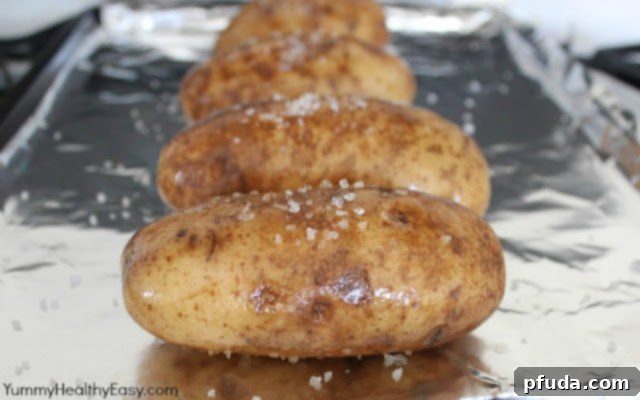
Now, it’s time to transform those humble potatoes into culinary stars. Rub a good amount of olive oil (about a teaspoon per potato) evenly over the entire surface of each potato skin. You can use your hands for this to ensure full coverage. The oil is vital for achieving that coveted crispy, golden-brown skin, and it also helps the salt adhere better.
Once oiled, place the potatoes on a foil-lined baking sheet. While optional, lining the baking sheet makes cleanup significantly easier. However, for the absolute crispiest bottom, some prefer to place the potatoes directly on the oven rack (with a pan underneath to catch any drips). Experiment to see what you prefer!
Finally, sprinkle generously with coarse salt. Don’t be shy here! The coarse salt not only adds incredible flavor to the skin but also helps to draw out moisture, contributing to that delightful crispy texture. A generous coating will create a delicious, salty crust that is truly a highlight of a perfectly baked potato.
Step 3: Baking to Perfection
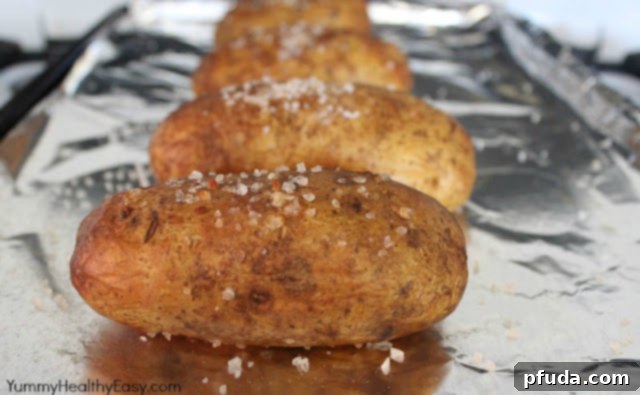
Place your prepared baking sheet with the potatoes into the preheated 425°F (220°C) oven. The baking time will vary depending on the size and thickness of your potatoes. Generally, they will need to bake for 45 minutes to an hour. For very large potatoes, it might take up to 90 minutes. It’s crucial not to rush this process.
The best way to tell if your baked potatoes are perfectly done is to perform a simple fork test. Gently stick a fork into the center of the largest potato. If the potato is finished cooking, the fork should slide through with little to no resistance, indicating a soft, tender interior. Another reliable indicator is an internal temperature of 205-212°F (96-100°C) if you have a kitchen thermometer. The skin should also appear golden brown and feel firm and crisp.
Resist the urge to open the oven frequently, as this causes temperature fluctuations that can hinder proper cooking and crisping. Once they reach perfection, carefully remove them from the oven using oven mitts.
Step 4: The Outback Steakhouse Trick: Achieving Fluffy Interiors
For an extra touch of fluffiness, and to make them easier to load with toppings, there’s a neat trick I learned while working as a server at Outback Steakhouse. This technique ensures a beautifully “smooshed” and inviting presentation.
Immediately after taking the hot potatoes out of the oven, take a sharp knife and make a single, long slit from end to end across the top of each potato. Be careful not to cut all the way through to the bottom skin. Then, using your thumb and middle fingers, gently squeeze the two ends of the potato towards the middle. This action pushes the fluffy interior upwards, creating that classic open, cloud-like appearance, while also releasing any remaining steam. This simple step makes even the most irregularly shaped potato look more appealing and creates a perfect well for your favorite toppings.
How To Make the Perfect Baked Potato
Print
Pin
Rate
Ingredients
- 4 medium-large Russet baking potatoes
- Olive oil (approx. 1 tsp per potato)
- Coarse salt (Kosher or sea salt)
Instructions
-
Preheat oven to 425 degrees F (220 C). Wash potatoes thoroughly with a vegetable scrubber and pat dry. Prick the skin of each potato with a fork 6-8 times all around.
-
Rub about a teaspoon of olive oil onto the skin of each potato, ensuring full coverage. Place on a foil-lined baking sheet (or directly on the oven rack for extra crispiness). Sprinkle generously with coarse salt.
-
Bake for 45 minutes to an hour (up to 90 minutes for very large potatoes), depending on their size and thickness. To check for doneness, stick a fork into the center – it should slide through easily with no resistance.
-
Immediately upon removing from the oven, make a long slit with a knife from end to end across the top of each potato. Gently squeeze the ends together towards the middle to fluff up the interior. Serve and enjoy with your favorite toppings!
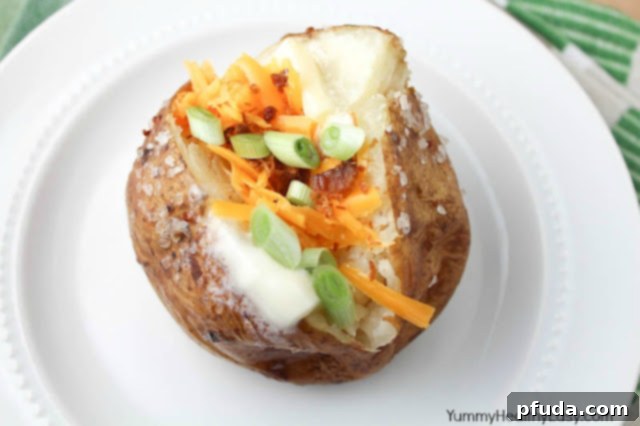
The Art of Topping Your Baked Potato
The plain baked potato is a delicious canvas, but its true magic often lies in the toppings. Once you’ve achieved that fluffy interior and crispy skin, it’s time to get creative!
- Classic Comforts:
- Butter: Always a good starting point, melting into the hot potato flesh.
- Sour Cream or Greek Yogurt: Adds a creamy, tangy contrast. Greek yogurt is a healthier alternative.
- Shredded Cheese: Cheddar, Monterey Jack, or a blend melts beautifully.
- Crispy Bacon Bits: Provides a salty, smoky crunch.
- Fresh Chives or Green Onions: A pop of freshness and mild onion flavor.
- Hearty Meal Builders:
- Chili: A hearty serving of chili turns a side into a main course.
- Pulled Pork or Chicken: BBQ-style pulled meats are fantastic.
- Salsa and Guacamole: For a Mexican-inspired twist.
- Black Beans and Corn: A vegetarian-friendly and flavorful option.
- Steamed Broccoli and Cheese Sauce: A classic pairing.
- Gourmet & Creative Options:
- Roasted Vegetables: Diced bell peppers, onions, mushrooms, or zucchini.
- Pesto: A spoonful of fresh pesto adds vibrant flavor.
- Feta Cheese and Olives: For a Mediterranean flair.
- Caramelized Onions: Sweet and savory, a perfect complement.
- Fried Egg: Transform it into a breakfast or brunch delight.
Don’t limit yourself to these suggestions – let your imagination run wild! The beauty of a baked potato is its adaptability to almost any flavor profile.
Troubleshooting: Common Baked Potato Mistakes to Avoid
Even with a simple recipe, minor missteps can prevent your baked potato from reaching its full potential. Here are some common mistakes and how to avoid them:
- Not Piercing the Skin: Forgetting to prick the potatoes before baking can lead to trapped steam, which can cause them to burst in the oven. Always pierce them several times!
- Baking at Too Low a Temperature: A low oven temperature (below 400°F) will result in a steamed potato with a soft, leathery skin, rather than a crispy one. Stick to 425°F for that golden crunch.
- Wrapping in Foil During Baking: While wrapping in foil *after* baking can keep potatoes warm, baking them *in* foil steams the skin, making it soft and unappealing. For truly crispy skin, bake them directly on the rack or on a foil-lined sheet without wrapping them individually.
- Using the Wrong Potato Type: Waxy potatoes (like red or new potatoes) are better for boiling or roasting where they need to hold their shape. Russets are specifically chosen for baking because their high starch content yields a fluffy interior.
- Not Drying the Potatoes: Any moisture on the skin before oiling and salting will prevent it from crisping up properly. Always pat them thoroughly dry.
- Undercooking or Overcooking: An undercooked potato will be hard and starchy in the center. An overcooked potato can become dry and mealy. Use the fork test or an internal thermometer to ensure perfect doneness.
- Not Seasoning the Skin: The skin is a crucial part of the baked potato experience. Skipping the oil and coarse salt means missing out on incredible flavor and texture.
Beyond Delicious: The Nutritional Benefits of Baked Potatoes
Often overlooked, the humble baked potato, especially when enjoyed with its skin, is a powerhouse of nutrition. It’s not just a delicious carb; it offers several health benefits:
- Rich in Vitamins and Minerals: Potatoes are an excellent source of Vitamin C, Vitamin B6, and potassium. Potassium is vital for heart health, muscle function, and maintaining fluid balance.
- Good Source of Fiber: The skin of a baked potato is particularly rich in dietary fiber, which aids digestion, promotes fullness, and can help regulate blood sugar levels. Eating the skin also adds beneficial antioxidants.
- Complex Carbohydrates: Potatoes provide complex carbohydrates, offering sustained energy.
- Naturally Gluten-Free: For those with gluten sensitivities or celiac disease, plain baked potatoes are a safe and satisfying option.
While toppings can enhance flavor, they also influence the nutritional value. Opt for healthier toppings like Greek yogurt, fresh herbs, and vegetables to keep your baked potato a wholesome choice.
Storing and Reheating Your Baked Potatoes
If you happen to have any leftover baked potatoes (a rare occurrence!), proper storage and reheating can ensure they remain enjoyable.
- Storage: Baked potatoes should be refrigerated within two hours of cooking. Place them in an airtight container or wrap them tightly in plastic wrap. They can be stored in the refrigerator for up to 3-4 days. It’s not recommended to store them at room temperature for extended periods, as this can encourage bacterial growth (specifically *Clostridium botulinum*).
- Reheating in the Oven: For the best results and to regain some of that crispy skin, reheat baked potatoes in the oven. Preheat your oven to 400°F (200°C) and bake for 15-20 minutes, or until thoroughly heated through. You can also place them directly on the oven rack.
- Reheating in the Microwave: While quicker, microwaving will result in a softer skin. Heat on high for 2-3 minutes, flipping halfway through, until hot. For a compromise, microwave until warm and then finish in a toaster oven or hot oven for a few minutes to crisp the skin.
With these tips and techniques, you’re now equipped to master the art of the perfect oven-baked potato. From selecting the right variety to the final fluffing trick, every step contributes to a culinary masterpiece that is both simple and incredibly rewarding. So go ahead, bake a batch, load them with your favorite toppings, and enjoy the delicious results!
Potatoes au Gratin
Easy Potato Casserole