Mastering the Mardi Gras King Cake: A Sweet Tradition Unveiled (with a Healthier Twist!)
There are few traditions as vibrant, joyful, and utterly delicious as Mardi Gras, and at the heart of this spectacular celebration lies the beloved King Cake. Far more than just a dessert, this festive confection embodies centuries of history, rich symbolism, and a spirit of communal revelry. Whether you’re planning a grand Fat Tuesday bash or simply seeking a delightful treat for any occasion, a King Cake is guaranteed to bring smiles and a touch of New Orleans magic to your table. (A special thank you to Truvia for sponsoring this post and helping us make this cake a little lighter!)
The Ancient Roots of Mardi Gras: A Journey Through Time
Have you ever wondered about the origins of Mardi Gras, also known as Fat Tuesday? This globally celebrated holiday, culminating just before the Christian season of Lent, boasts a history that stretches back millennia. Historians trace its roots to ancient pagan spring and fertility rites, such as Rome’s Saturnalia and Lupercalia festivals. These were times of feasting, revelry, and social inversion, marking the end of winter and the promise of new life.
When Christianity began to spread across Europe, religious leaders often integrated existing popular traditions into the new faith, rather than eradicating them entirely. This strategic merger allowed for a smoother transition, giving rise to the Carnival season – a period of celebration and indulgence serving as a final feast before the solemnity and fasting of Lent. “Mardi Gras” itself, meaning “Fat Tuesday” in French, refers to the practice of consuming all rich, fatty foods in the household before the Lenten fast begins on Ash Wednesday. This vibrant tradition spread from Rome to other European countries, including France, Germany, Spain, and England, each adapting it with their own unique cultural flair.
Mardi Gras Arrives in America: The New Orleans Legacy
The first documented American Mardi Gras celebration is believed to have occurred on March 3, 1699, when French explorers, led by Pierre Le Moyne d’Iberville, landed near present-day New Orleans, Louisiana. They marked the occasion with a small celebration and christened the landing spot “Point du Mardi Gras.” Over time, as French settlements like New Orleans flourished, the holiday became ingrained in the local culture, celebrated with increasing grandeur through elaborate street parties, exclusive masked balls, and lavish dinners that truly embraced the spirit of indulgence.
The public spectacle of Mardi Gras truly took root in 1837 with the first recorded New Orleans Mardi Gras parade, a tradition that has evolved and expanded into the globally recognized phenomenon it is today. A pivotal moment in this evolution came in 1857 when a secret society of prominent New Orleans businessmen, known as the Mistick Krewe of Comus, organized a torch-lit procession featuring marching bands and spectacularly designed rolling floats. This event laid the groundwork for the modern Carnival season, establishing the tradition of “krewes” – social organizations responsible for organizing parades and balls – which remain central to the Carnival scene in Louisiana. Enduring customs like throwing colorful beads and trinkets, wearing intricate masks, decorating magnificent floats, and, of course, baking and enjoying King Cake, all contribute to the inimitable magic of Mardi Gras. It’s truly a celebration of life, culture, and community!
The Allure of the King Cake: A Culinary Masterpiece
Now, let’s talk about the star of the show: the King Cake. This isn’t just any cake; it’s a culinary experience steeped in tradition and bursting with flavor. While there are countless variations, the essence of a King Cake lies in its rich, brioche-like yeast dough. This dough is carefully prepared, allowed to rise until perfectly airy, and then rolled out into a large, inviting rectangle.
The heart of our King Cake, and indeed many traditional versions, is its delectable filling. We particularly love a sweet and aromatic blend of cinnamon, finely chopped pecans, and for a thoughtful, lower-calorie option, Truvia Brown Sugar Blend. This creates a beautifully balanced sweetness without excess sugar, allowing the natural flavors to shine through. Once the filling is evenly spread, the dough is meticulously rolled into a long, slender cylinder, reminiscent of a giant cinnamon roll. However, unlike a typical cinnamon roll, the ends of this cylinder are then brought together and gently fused to form a distinctive oval or ring shape, symbolizing unity and continuity.
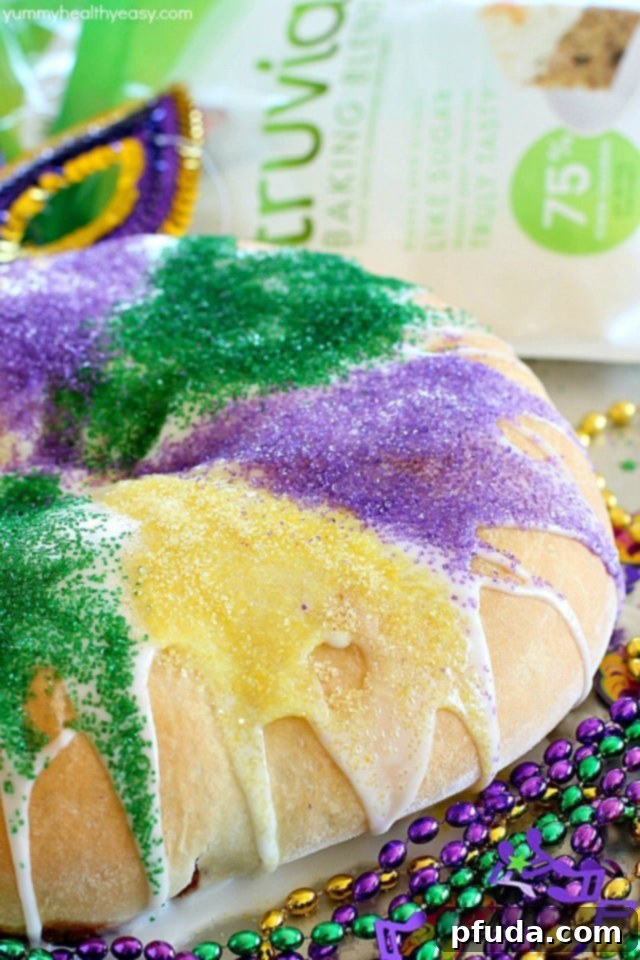
After baking to a golden perfection, the cooled cake is adorned with a simple, sweet icing and sprinkled generously with colored sugars in the iconic Mardi Gras hues: royal purple, vibrant green, and shimmering gold. The visual appeal alone is enough to spark joy, making it a true centerpiece for any celebration.
The Hidden Secret: Unveiling the King Cake Baby and Its Significance
One of the most charming and enduring traditions associated with the King Cake is the inclusion of a tiny plastic baby figurine, hidden within the dough before baking. This seemingly simple act carries profound historical and symbolic weight. The baby represents the infant Jesus, connecting the King Cake directly to the Christian holiday of Epiphany.
The Mardi Gras, or Carnival, season officially commences on January 6th, a day universally known as “King’s Day” or the Epiphany. For Christians, the Epiphany marks the occasion when the infant Jesus first “showed” himself to the world, specifically to the Three Wise Men (the Magi) who traveled to Bethlehem to present their gifts. Thus, the hidden baby serves as a tangible link to this biblical narrative, signifying the revelation of Christ.
Beyond its religious connotations, the tradition of the King Cake baby also introduces an element of playful luck and responsibility. In New Orleans, the person who discovers the baby in their slice of cake is bestowed with the honor – and sometimes the delightful obligation – of hosting the next Mardi Gras party or providing the King Cake for the following year’s celebration. This adds an exciting layer of anticipation and social engagement to the act of serving and enjoying the cake, fostering community and ensuring the tradition continues.
The Royal Hues: Symbolism of Purple, Green, and Gold
The vibrant colors that adorn every King Cake – purple, green, and gold (often interpreted as yellow) – are not merely decorative. They are deeply symbolic and integral to the Mardi Gras tradition. These official colors were chosen in 1872 by the Rex Krewe (often considered the King of Mardi Gras) to honor the three kings (the Magi) who visited the Christ child on Epiphany. Each color carries a specific meaning:
- Purple: Represents Justice, signifying fairness and moral rightness.
- Green: Symbolizes Faith, embodying hope, spirituality, and belief.
- Gold (Yellow): Denotes Power, reflecting majesty, wealth, and influence.
These colors infuse the King Cake with a sense of regality and purpose, transforming it from a simple dessert into a celebratory emblem that encapsulates the spirit and values of Mardi Gras. Understanding these layers of meaning truly enhances the experience of enjoying this magnificent cake.
Baking a Healthier King Cake with Truvia
Now that you’re a Mardi Gras King Cake connoisseur, doesn’t all this history and deliciousness make you want to rush to your kitchen and bake one yourself? You absolutely should! And the best part is, you can indulge in this delightful tradition without compromising on your health goals.
Thanks to versatile sugar substitutes like Truvia, creating a lower-calorie and lower-sugar King Cake is both simple and incredibly rewarding. By using Truvia Baking Blend in place of regular sugar and Truvia Brown Sugar Blend instead of traditional brown sugar, you can significantly reduce the sugar content while maintaining all the luscious sweetness and texture expected from a classic King Cake. These blends are expertly crafted to bake and brown like sugar, ensuring your cake rises beautifully and achieves that perfect golden crust.
Additionally, we’ve incorporated a clever trick to further lighten this recipe: substituting a portion of the butter with unsweetened applesauce. This simple swap reduces fat and calories without sacrificing moisture, resulting in a cake that is wonderfully light, incredibly flavorful, and still decadent enough to impress everyone. This healthier approach means you can enjoy a slice (or two!) of King Cake not just for dessert, but even as a delightful breakfast pastry. It’s a testament to how traditional indulgence can be adapted for a more balanced lifestyle, proving that deliciousness and health can indeed go hand-in-hand.
Mardi Gras King Cake
Print
Pin
Rate
Ingredients
For the Dough:
- 1/2 cup milk
- 2 Tbsp. unsalted butter*
- 1 1/4 oz package active dry yeast (or rapidrise yeast)
- 1/3 cup warm water (around 105-115ºF)
- 2 Tbsp. Truvia Baking Blend (or 1/4 cup granulated sugar)
- 1 large egg
- 3/4 tsp. salt
- 1/4 tsp. ground nutmeg
- 2 3/4 cups all-purpose flour
For the Filling:
- 1/4 cup + 2 tsp. Truvia Brown Sugar Blend (or 1/2 cup light brown sugar)
- 2 Tbsp. pecans , finely chopped
- 2 Tbsp. all-purpose flour
- 2 Tbsp. unsweetened applesauce
- 2 Tbsp. butter , melted
- 1/2 Tbsp. ground cinnamon
For the Icing & Decoration:
- 2 cups powdered sugar
- 3 Tbsp. milk (or until thinned to your liking)
- purple, yellow, and green colored sugar for topping
- 1 small plastic baby figurine (food-safe, optional, to be inserted before baking)
Instructions
-
In a microwavable dish, measure out the milk. Add the butter and microwave for approximately 1 minute, or until the butter is fully melted. Stir the mixture well and set it aside to cool to room temperature. This is crucial to not kill the yeast later.
-
In a separate measuring cup, pour in the warm water (ensure it’s between 105-115ºF). Stir in 1.5 teaspoons of the Truvia Baking Blend (or 1/2 Tablespoon of granulated sugar). Gently sprinkle the active dry yeast over the water and stir lightly. Allow the mixture to stand undisturbed for about 10 minutes, or until it becomes foamy and bubbly, indicating the yeast is active.
-
Pour the cooled milk/butter mixture into a large mixing bowl. Add the activated yeast mixture. Whisk them together lightly to combine. Next, whisk in the egg, the remaining Truvia Baking Blend (or sugar), salt, and ground nutmeg until thoroughly incorporated.
-
Gradually add the all-purpose flour. Begin by adding the first cup and whisking it into the wet ingredients. Then, add the remaining flour and stir with a sturdy wooden spoon until a shaggy dough forms and all the flour is combined.
-
Turn the dough out onto a lightly floured surface. Knead the dough vigorously for about 5-8 minutes, or until it becomes smooth, elastic, and no longer sticky. Lightly spray the mixing bowl with cooking spray and place the kneaded dough inside. Cover the bowl with a clean cloth or plastic wrap and let the dough rise in a warm, draft-free place until it has doubled in volume, which typically takes about 2 hours.
-
While the dough is rising, prepare the delicious filling. In a medium bowl, combine the Truvia Brown Sugar Blend (or light brown sugar), finely chopped pecans, all-purpose flour, unsweetened applesauce, melted butter, and ground cinnamon. Stir all ingredients together until well combined and form a paste-like consistency. Set this mixture aside.
-
Once the dough has risen, gently punch it down to release the air. Transfer the dough to a lightly floured surface and roll it out into a large rectangle, approximately 10×16 inches in size. Evenly sprinkle the prepared filling over the entire surface of the dough, spreading it almost to the edges. Starting from one of the wider sides, tightly roll the dough into a long cylinder, similar to a jelly roll. Bring the ends of the rolled dough together to form an oval or ring shape. Trim a small piece off each end to create straight edges, then use a tiny bit of water to moisten and press the ends firmly together to seal them. At this stage, if using, carefully insert the small plastic baby figurine into the underside of the cake ring.
-
Carefully transfer the shaped King Cake to a greased baking sheet. Cover it loosely with plastic wrap or a clean cloth and let it rise for another 45 minutes, or until it has noticeably doubled in size.
-
Preheat your oven to 325 degrees F (160 degrees C). Bake the King Cake for approximately 30 minutes, or until the crust is beautifully golden brown. Once baked, remove the cake from the oven and let it cool completely on a wire rack before icing. To make the icing, whisk together the powdered sugar and milk until you reach your desired drizzling consistency. Drizzle the icing generously over the cooled King Cake. Immediately sprinkle with the colored sugars, alternating purple, yellow, and green in sections around the cake.
-
Slice and enjoy this festive and delicious Mardi Gras King Cake!
Notes
If you enjoyed this festive King Cake recipe, you might also love these delightful treats:
Creamy Lemon Angel Cake Roll
Strawberry Dump Cake
Banana Bread Cake